Looking for signs every day
During my two years with molluscum I checked my skin four to five times a day. I looked at every spot as if I could tell from it whether it was finally healing. Sometimes a spot got better, and for a moment there was hope. Then a new one appeared somewhere else.
My skin was often very red during that time. Whether that was a good or a bad sign, I never knew. It was exactly this uncertainty that cost me a lot of energy. That’s why I later read a lot about how healing is described in reputable sources.
One spot heals, and yet new ones appear
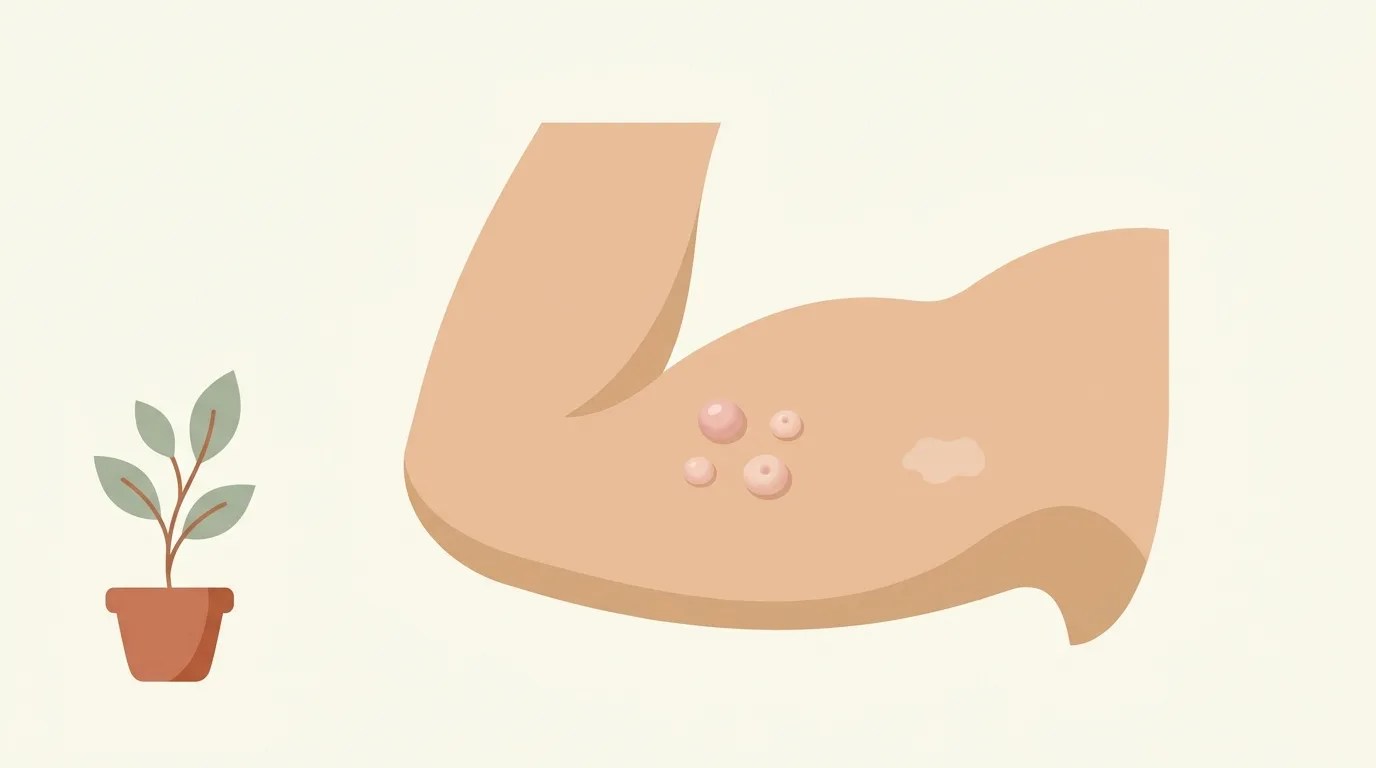
While reading, I learned that you have to keep two things apart: how long a single spot lasts and how long the molluscum lasts as a whole. According to the sources, a single spot can disappear after a few weeks or months. But because new ones can appear, the whole thing can drag on for much longer.
According to DermNet, new spots can go back to an infection some time ago, because there are often about two weeks, but sometimes up to six months, between infection and a visible bump. On top of that comes self-infection through scratching. I experienced exactly this pattern: individual spots got better, but new ones appeared.
How long it can take overall is collected in the article How long does molluscum last?.
Redness before healing
One thing surprised me while reading. A case report from 2025 describes that molluscum can turn red and inflamed shortly before it heals. In medical terms this is called the “BOTE sign”, for “beginning of the end”. There, the redness is described as the immune system’s reaction to the virus.
But redness can also have other causes, for example a bacterial infection after scratching. From the outside, I can’t tell the difference. From everything I read, an inflamed, painful or very red spot should therefore be looked at by a doctor. More on this in the article Itchy, red or inflamed molluscum.
Light, pink or dark marks afterwards
The British Association of Dermatologists, the professional body of dermatologists in the UK, describes in its patient information that after healing the skin may look different at first: whitish, pink, purplish or darker. Over time, according to this source, it usually regains its normal colour.
I would have liked to know that earlier. If you look at your skin every day, you get a fright quickly when a mark stays where a bump used to be. Knowing that, according to the sources, this is often temporary would have spared me some worry.
Does molluscum leave scars?
According to the patient information of the British Association of Dermatologists, a small scar or a paler patch of skin is sometimes left behind; according to this source, some treatments increase the risk of that. On gesund.bund.de I also read that treatments can have side effects such as scarring.
Scars are apparently not only a question of treatment, though. In a retrospective study from the US from 2025, almost a quarter of the people surveyed who had no treatment reported scars or changes in skin colour. The study is small, and the information is based on people’s memories. The NHS also names squeezing and scratching the spots as a reason why scars can form.
Itching and irritated skin around the spots
My spots itched every now and then, not constantly, but often enough to make me nervous. On DermNet I read that eczema often forms around molluscum, an irritated, itchy patch of skin. DermNet also lists a bacterial infection from scratching as a possible complication.
That helped me understand why the sources advise so clearly against scratching. What I read about itching and inflammation is covered in detail in the article Itchy, red or inflamed molluscum.
When the sources advise getting it checked
Especially while it heals, it’s hard to judge what is normal. From what I read on the NHS website and on gesund.bund.de, a spot should be looked at by a doctor in situations like these, for example:
- if it becomes very red, painful or swollen,
- if spots appear near the eyes,
- if it isn’t clear whether it is molluscum at all,
- if the immune system is weakened.
This is not a complete list and doesn’t replace a conversation at a practice. More on this in the article Seeing a doctor about molluscum.
Common questions about healing
How can you tell molluscum is healing? A case report describes that spots can turn red shortly before healing. But redness can also have other reasons. Only a doctor can judge it reliably.
Does molluscum leave scars? According to the British Association of Dermatologists, a small scar or a paler spot is sometimes left behind; some treatments increase the risk of that. Often the skin colour is only changed temporarily.
Is molluscum still contagious while it heals? What I read about that is in the article How long is molluscum contagious?.
What I take away from this
Looking back, I would have liked to experience healing less as a daily test. Not every redness is a setback, not every mark stays. And a new spot doesn’t mean everything starts over.
For me, after about two years, nothing was visible any more. Was it coincidence? I don’t know. How it came to that, I tell in my story.